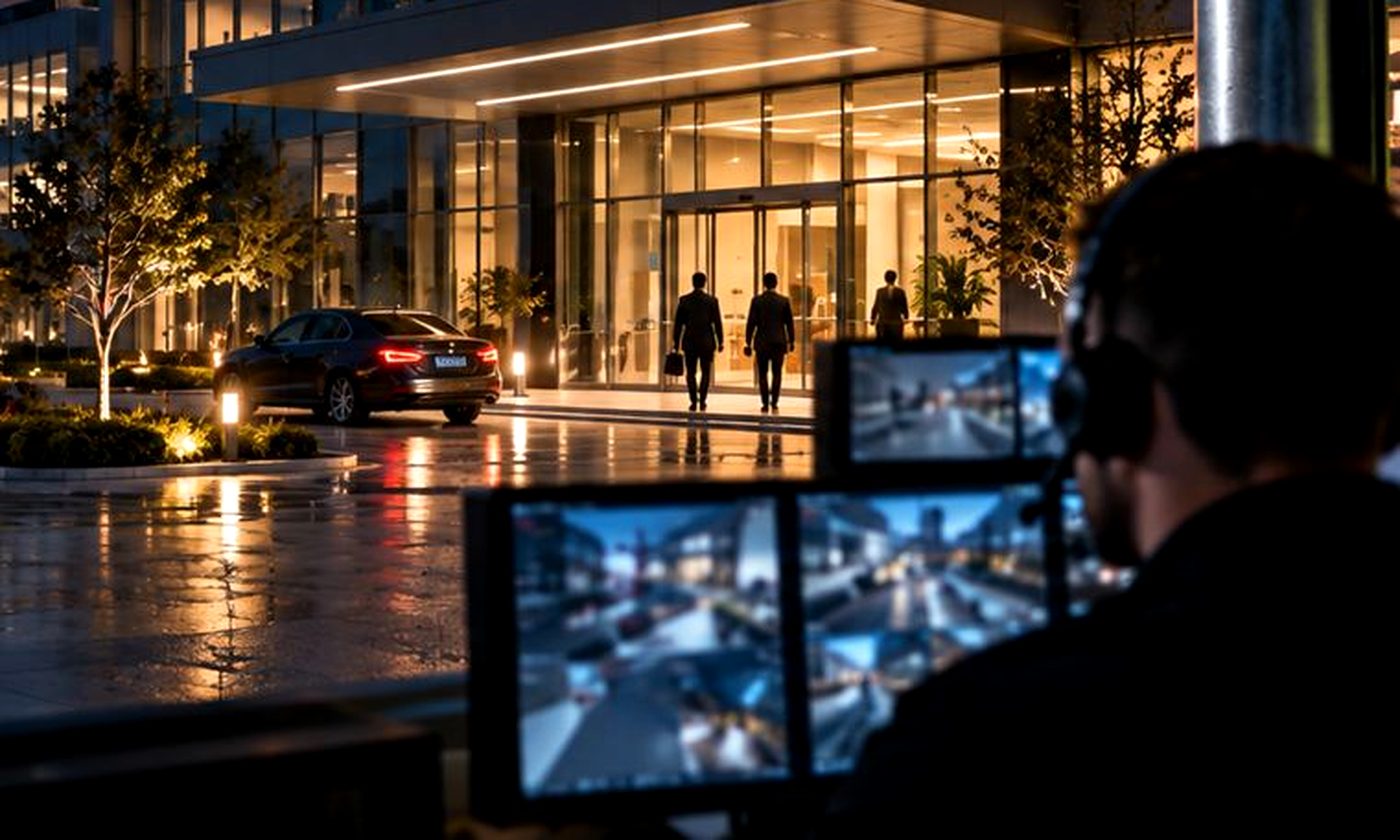
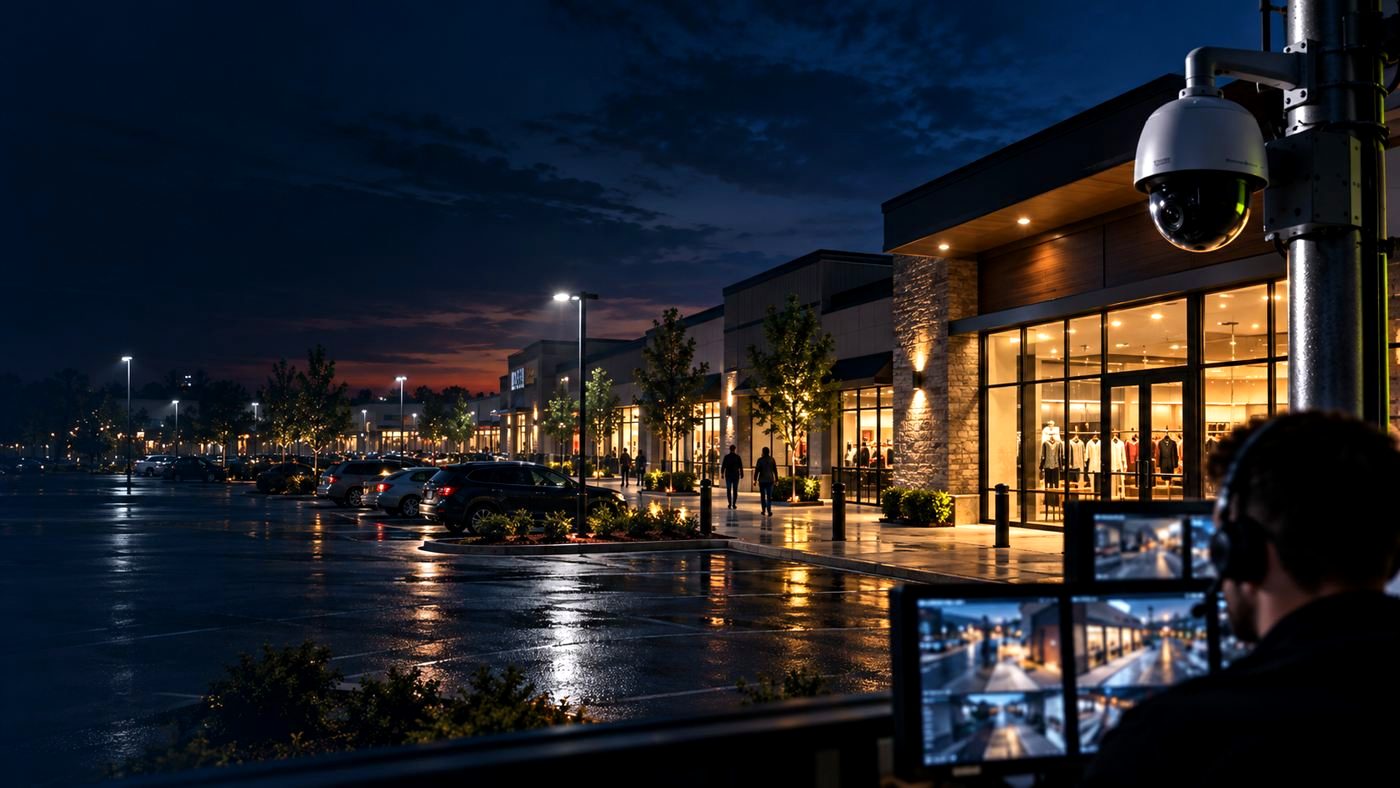
Keep the center safe after the last store closes.
Smash-and-grab, rear-door break-ins, encampments in the walkways and vandalism in the lot drive tenants away long before they show up on an insurance claim. We watch the whole center — storefronts, service corridors and parking — and intervene while there is still time.
The after-hours problems retail centers deal with
Most of them are visible on camera long before anything is damaged.
Storefront break-ins
Vehicles backing into glass, pry attempts on doors, and the ten minutes of staging that usually precede them.
Loitering & encampments
Walkways and alcoves become overnight camps; the morning clean-up and tenant complaints become your problem.
Parking-lot crime
Catalytic converter theft, vehicle break-ins and dumping on the far edges of the lot.
Vandalism & graffiti
Tagging, broken fixtures and damaged landscaping that cost more in tenant goodwill than in repairs.
How we cover a retail center
Storefront approach zones, service corridors and lot perimeters — with store-level alerts for tenants who want them.
- Approach zones on each storefront with dwell-time alerts
- Rear service corridors and loading areas armed after deliveries end
- Lot perimeter and far-edge zones for dumping and vehicle crime
- Live talk-down at walkways to prevent encampments before they form
- Optional per-tenant alerts and interior camera integration
Sample layout — your plan is drawn from a site walk and your existing camera positions.
A Friday night at a strip center in Inglewood
Walkway and storefront zones arm. Operator confirms rear doors are closed on camera and notes a propped service door — tenant texted.
Four people settle in with bags. Operator issues a courteous live audio notice; group moves on within two minutes.
Logged as suspicious. Operator keeps the PTZ on it; it leaves.
Analytics flag two people in the service corridor. Operator verifies, issues a warning naming their clothing; both run. Patrol dispatched; door undamaged.
Doors checked, photos taken, drive-through of the lot. Tenant and property manager texted with clip.
Three events, two interventions, zero damage. Recommendation: replace the corridor light that failed at 01:00.

What we usually deploy at retail centers

AI Video Monitoring
Proactive, 24/7 monitoring of your existing cameras with AI detection and a human operator behind every alert.
Explore service
Virtual Security Guard
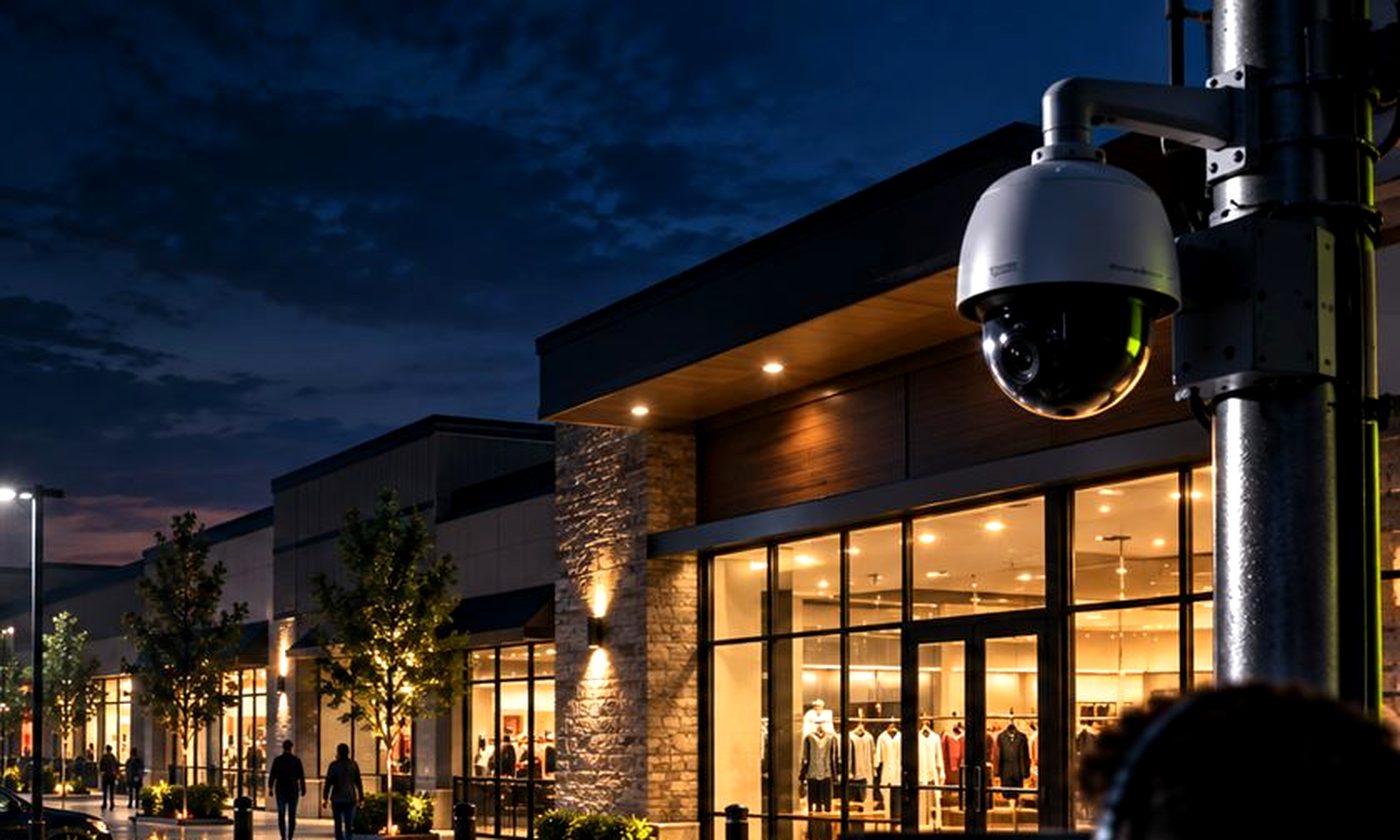
A remote guard presence: scheduled virtual patrols, live two-way audio and escorted access — without a posted officer.
Explore service
Incident Response & Dispatch
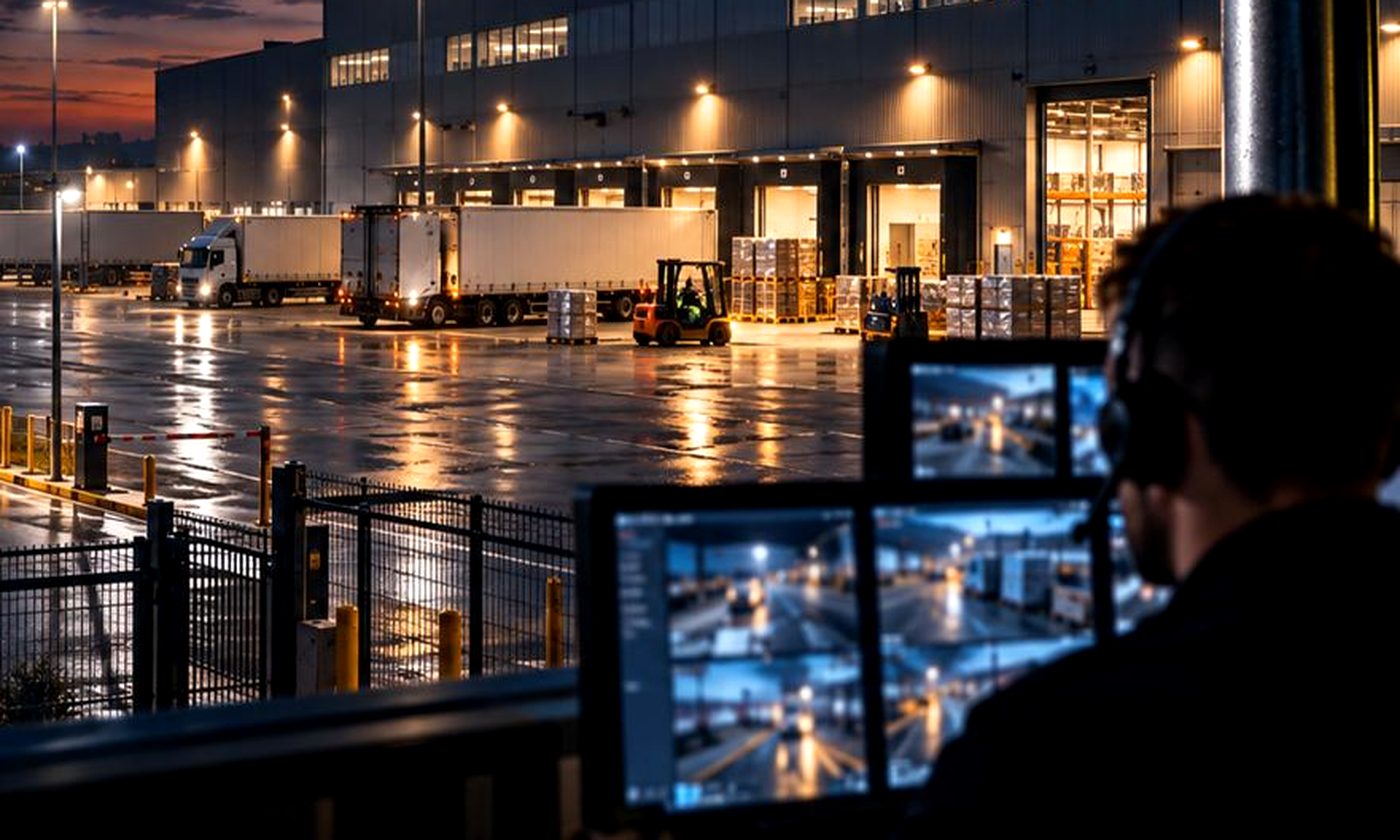
A written escalation ladder for every site: audio warning, mobile response, standing officer, police — executed by operators, documented for you.
Explore service

Camera Health Monitoring
Continuous checks on every stream — offline cameras, blocked or blurred views, night-time failures — ticketed and fixed before they become blind spots.
Explore serviceRetail & Shopping Centers monitoring FAQ
Yes. Tenant interior cameras can be tied into the same program with alerts routed to the tenant and incidents still handled by our operators.
Speakers are aimed at the walkways and lot and used only when needed. Operators are trained to be firm and brief; most warnings last under 20 seconds.
Often we replace a fixed overnight guard and keep patrol as the response layer — which is usually a significant saving.
Get a flat monthly price for your property.
Send a site address and a camera count. We come back with a coverage map, a recommended program and pricing — usually within one business day.
Tell us about your site
Sent to info@virtualsitesecurity.com · We reply within one business day. No obligation.
Give your tenants a center that is quiet in the morning.
Send the site plan and camera count for a center-wide quote.